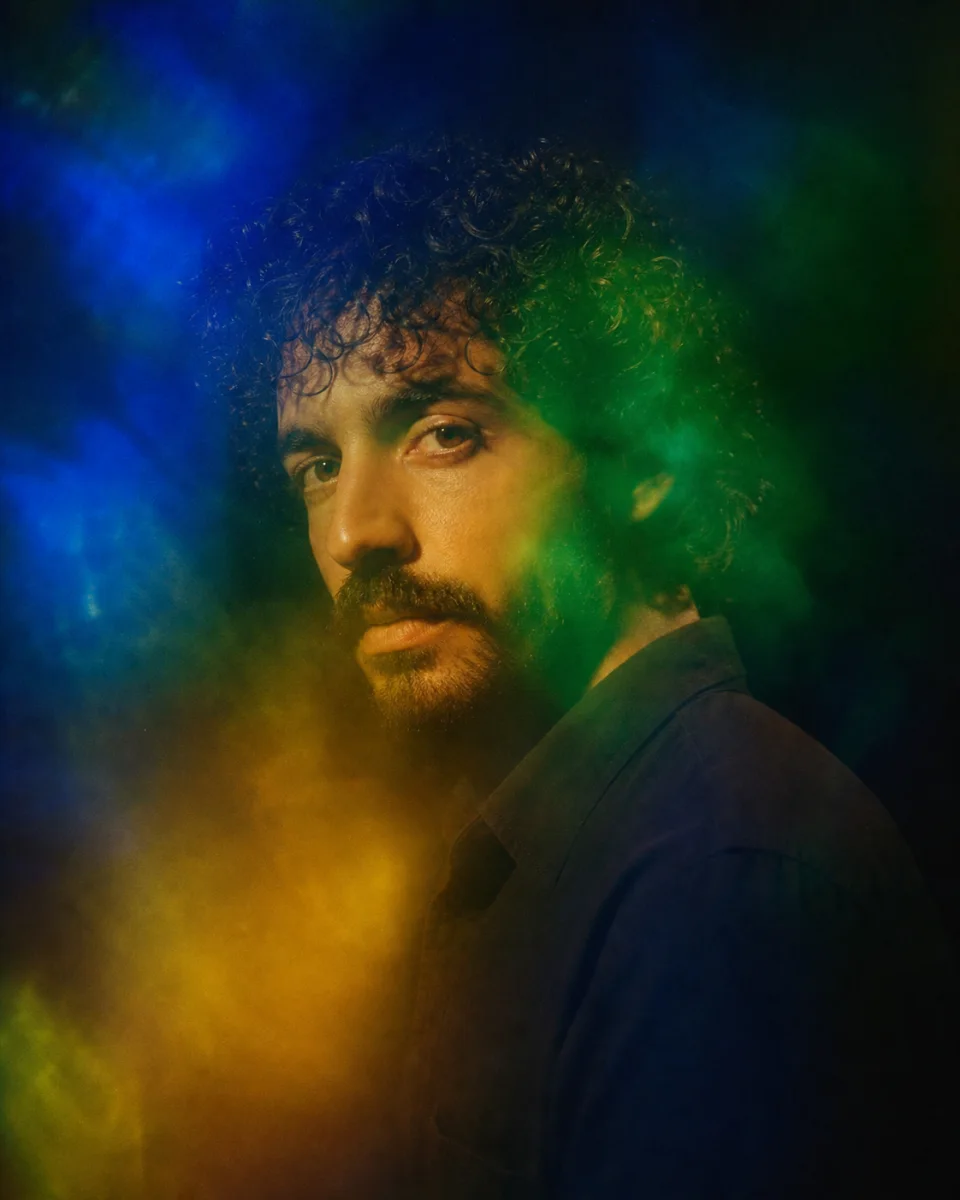
Aura photography and Kirlian photography are often treated as the same thing, but they use different equipment and create different kinds of images. Kirlian photography records corona discharge around an object in a high-voltage field. Many modern aura portrait studios translate sensor readings into color around a conventional photograph. AI aura generators create an artistic color field from an uploaded portrait. Understanding the input is the simplest way to understand what each result can—and cannot—claim.
The short answer
Kirlian photography is an electrographic process. An object is placed near a photographic plate or detector and exposed to a high-frequency, high-voltage electrical field. The visible fringe is a corona discharge shaped by physical conditions. Aura photography is a broader consumer term. It may refer to Kirlian-style imagery, but it more often means a colored portrait produced with hand sensors, software, or digital effects.
An AI aura photo is different again. It begins with an ordinary digital image and uses a generative or compositing system to create a luminous portrait. The model can make an expressive result and pair it with a reflective color story, but it is not reading voltage from the body. When a product explains which process it uses, you can appreciate the experience without confusing art, biofeedback, and electrography.
What Kirlian photography actually records
In a Kirlian setup, the photographed object participates in an electrical discharge. The resulting branching or halo-like pattern is visually compelling, especially around fingertips, leaves, coins, and other conductive subjects. The pattern is not independent of the apparatus. Voltage, frequency, pressure, humidity, contact, film or sensor properties, and surface moisture can all affect what appears.
A paper published in Science in 1976 tested corona-discharge photography and reported that image variation could be explained by moisture on and within the subject alongside changes in the electrical circuit. That does not make the images uninteresting. It means the correct description is physical: the photograph shows corona activity under particular conditions. A stronger metaphysical claim would need separate evidence that the image itself does not provide.
How sensor-based aura portraits work
A typical aura portrait studio takes a conventional photograph while the subject places one or both hands on sensors. The system may read values such as skin conductance, temperature, or pulse, then map those values to predefined colors and positions. The portrait and the colored overlay are combined into one print. The exact mapping belongs to the equipment maker or practitioner, so two systems may not assign the same hue to the same input.
The experience can still have value as a ritual. Sitting for the portrait, seeing a physical print develop, and discussing it with a practitioner can create a memorable prompt for reflection. But the visual colors are a software translation of chosen measurements, not direct light emitted from a hidden body outline. Ask a studio what sensors it uses, what the colors represent, and how consistent the mapping is before treating the result as measurement.
How AI aura photography works
An AI aura generator starts with visible photographic information: face position, composition, light, contrast, clothing, background, and the model’s learned visual patterns. It then produces or composites a glowing color field around the portrait. Some products ask for a mood or spiritual category. AuraPhotoAI does not use a mood quiz; it creates a palette from visible image cues and a documented creative ruleset.
The reading is an editorial layer. It connects color names, placement, and prompts using a versioned color dictionary. Research on color and emotion can inform cautious language, but it cannot turn an AI portrait into a detector. The honest description is an artistic portrait with a reflective reading. The advantage is accessibility and creative control; the limitation is equally clear: no electrical field or physiological sensor is being measured.
Why the images can look related
All three formats use a familiar visual idea: the subject surrounded by radiance, color, or energetic-looking texture. Corona discharge naturally creates branching luminous edges. Sensor-based portraits deliberately translate measurements into clouds or bands of color. AI imagery has learned a large visual vocabulary of halos, gradients, double exposure, film bloom, and light leaks. Similar aesthetics do not establish a shared mechanism.
This distinction matters because a beautiful result encourages viewers to infer a powerful cause. In design, that is part of the appeal. In explanation, it can become misleading. A product page should name the medium close to the image: electrographic capture, sensor-mapped portrait, or AI-generated art. Once that label is clear, people can compare the experiences on the qualities that actually differ—ritual, speed, privacy, price, reproducibility, and creative style.
Can any method prove a human energy field?
A photograph can document the output of its equipment, but it cannot automatically prove every interpretation attached to that output. Kirlian images document corona discharge under set conditions. Sensor portraits document a software visualization of sensor values. AI portraits document a generated visual response to an image and model instructions. None of those facts, by themselves, establish that the colored fringe is a measurable spiritual field surrounding a person.
That boundary should shape the language around a reading. Avoid claims about illness, trauma, deception, destiny, relationship success, or mental health. Do not tell a user that a dark color reveals danger or that one palette is spiritually superior. Reflective prompts are safer and more useful: What does this color remind you of? What feels open? What needs a boundary? The user’s context remains more authoritative than the generated label.
Which type should you choose?
Choose Kirlian photography if you are specifically interested in electrography and can access a safe, well-run setup. Choose a sensor-based studio if you want an in-person ritual, a physical portrait, and a conversation with a practitioner. Choose an AI aura photo if you want to use your own selfie, experiment with several visual styles, keep the process online, and receive a result quickly.
Cost and privacy also differ. A studio session can involve travel, an appointment, and a higher fee. An online tool can offer a free preview, but you should confirm how uploads and finished results are handled. Reproducibility varies in every format: changing pressure or moisture affects a corona image, changing sensor contact affects a mapped portrait, and changing light or crop affects an AI result. Variation is expected, not evidence that a hidden state suddenly changed.
- Choose by process and experience, not by the boldest claim.
- Ask what input produces the colors.
- Check privacy, price, and whether you can preview the result.
- Keep health and relationship decisions outside the reading.
Questions to ask an aura photographer
Before booking, ask the photographer to describe the equipment in plain language. Does the camera capture corona discharge, does software map hand-sensor data to a portrait, or is the color added as an artistic effect? Ask whether the mapping is published, whether the raw values are available, and whether a second portrait taken immediately can produce a different result. Clear answers are a sign that the practitioner respects the boundary between process and interpretation.
Also ask what happens to your photograph. Will it be deleted, stored, displayed in a portfolio, or used to train a model? Can you decline public use? Is the price for the session, print, digital file, or reading? A meaningful spiritual or creative experience does not require vague consent. The more personal the interpretation, the more important it is that the practical terms stay specific.
How to evaluate an online aura generator
Look for a real example gallery, a visible explanation of the method, and a privacy policy that mentions source photos. A trustworthy generator should let you understand the free and paid result before checkout. It should distinguish the artwork from scientific measurement and avoid fear-based meanings. It should also provide enough image guidance that a failed upload can be corrected rather than blamed on the user’s energy.
Check whether the color meanings are consistent across the site. If the same shade means calm on one page and danger on another, the reading is probably improvised around conversion copy. A versioned color system, source notes, and explicit editorial labels make the interpretation easier to audit. They do not make it objective; they make the creative rules visible.
A responsible way to enjoy the result
Name the method first, then enjoy what it does well. A Kirlian image can be a fascinating record of corona discharge. A studio portrait can be a memorable ritual and conversation. An AI aura portrait can turn a familiar selfie into expressive art. None needs to become a diagnosis in order to be worth making.
Use the finished color story as a journal prompt. Write what was happening that day, what the palette evokes for you, and one small action you want to remember. If you create another image later, compare the art and your notes without treating the change as a test result. The value lives in attention, imagination, and the story you choose to keep.
The bottom line
Aura photography is an umbrella term; Kirlian photography is a specific electrographic technique. Sensor-based aura cameras translate selected physical readings into colors, while AI aura tools generate a designed portrait from visible image cues. The outputs can share a glowing look while recording completely different inputs.
The most reliable question is not “Which one sees the real aura?” but “What process made this image, and is that process described honestly?” Once you know the answer, choose the experience that fits your purpose. If you want a fast creative portrait, try a free preview. If you want the equipment ritual, research a studio. In either case, keep the meaning gentle, contextual, and yours to accept or leave behind.
Sources and method notes
We distinguish peer-reviewed evidence, historical practice, and AuraPhotoAI editorial interpretation. These links let you inspect the basis directly.
- Pehek, Kyler & Faust, Science (1976)Primary research on physical variables in corona-discharge photography.
- Library of Congress: Kirlian photographyLibrary authority record classifying the photographic subject.
- AuraPhotoAI method and limitsHow this site creates an artistic AI Aura Photo.